The Scroll Before Bed
It’s midnight. You promise yourself you’ll just scroll for “five more minutes.” An hour later, you’re still wide awake, eyes locked on glowing screens, mind racing from endless updates, likes, and videos. You put your phone down feeling restless, not refreshed.
This nightly ritual is one of the many ways social media mental health issues creep into our lives. While social media helps us connect and share, research shows its effects on mental health can be serious, sometimes life-changing.
When Connection Turns Into Comparison
Let’s take Maya, a university student, as an example. She opens Instagram to catch up with friends, but soon she’s scrolling through pictures of vacations, fitness transformations, and graduation celebrations. Her first thought isn’t joy, it’s self-doubt: “Am I falling behind?”
This scenario reflects what psychologists call the highlight reel effect. We only see the best 5% of someone’s life online, but we compare it to our own 100%.
Research says:
- A 2019 study in the Journal of Social and Clinical Psychology found that limiting social media to 30 minutes a day reduced feelings of loneliness and depression.
- The Royal Society for Public Health survey ranked Instagram as the worst platform for young people’s mental health, especially due to body image pressures.
The Anxiety Trap
Imagine checking your phone every few minutes to see if someone has liked your post. Each buzz of a notification feels exciting, but when it’s quiet, anxiety creeps in. This is social media anxiety, and it’s more common than we think.
Psychologists explain that platforms are built to trigger our brain’s dopamine reward system. Notifications act like small “wins,” similar to gambling. The unpredictability keeps us hooked.
Research says:
- A University of Pennsylvania study found that students who cut down their usage to 30 minutes a day reported less anxiety and better mood.
- The American Psychological Association warns that constant digital checking is linked to increased stress.
Sleepless Nights and Restless Minds
Picture a teenager, lying in bed at 1 a.m., phone glowing in the dark. They scroll TikTok endlessly, promising themselves “just one more video.” By the time they stop, their brain is overstimulated, and sleep feels impossible.
This is a classic case of social media addiction colliding with poor sleep hygiene.
Research says:
- Blue light from screens delays melatonin, making it harder to sleep.
- Poor sleep is directly tied to higher risks of depression and anxiety (CDC, 2022).
- Surveys show teens who use social media heavily are more likely to report insomnia and fatigue.
Cyberbullying: The Silent Pain
Imagine being a high schooler who posts a harmless photo, only to wake up to cruel comments the next morning. Unlike traditional bullying, cyberbullying doesn’t end when the school day does, it follows victims into their bedrooms, available 24/7.
Research says:
- Victims of cyberbullying are at double the risk of depression and suicidal thoughts (JAMA Pediatrics, 2018).
- 59% of U.S. teens say they’ve been bullied or harassed online (Pew Research Center).
Different Platforms, Different Problems
Each social media platform has its own mental health challenges:
- Instagram: Body image issues; comparisons lead to low self-esteem.
- TikTok: Highly addictive short videos fuel overuse and sleep problems.
- Twitter/X: Constant exposure to heated debates and bad news feeds stress and doomscrolling.
- Facebook: Comparison stress from seeing friends’ milestones.
While the apps differ, the outcome often overlaps: more stress, less confidence, poorer mental health.
When Likes Define Self-Worth
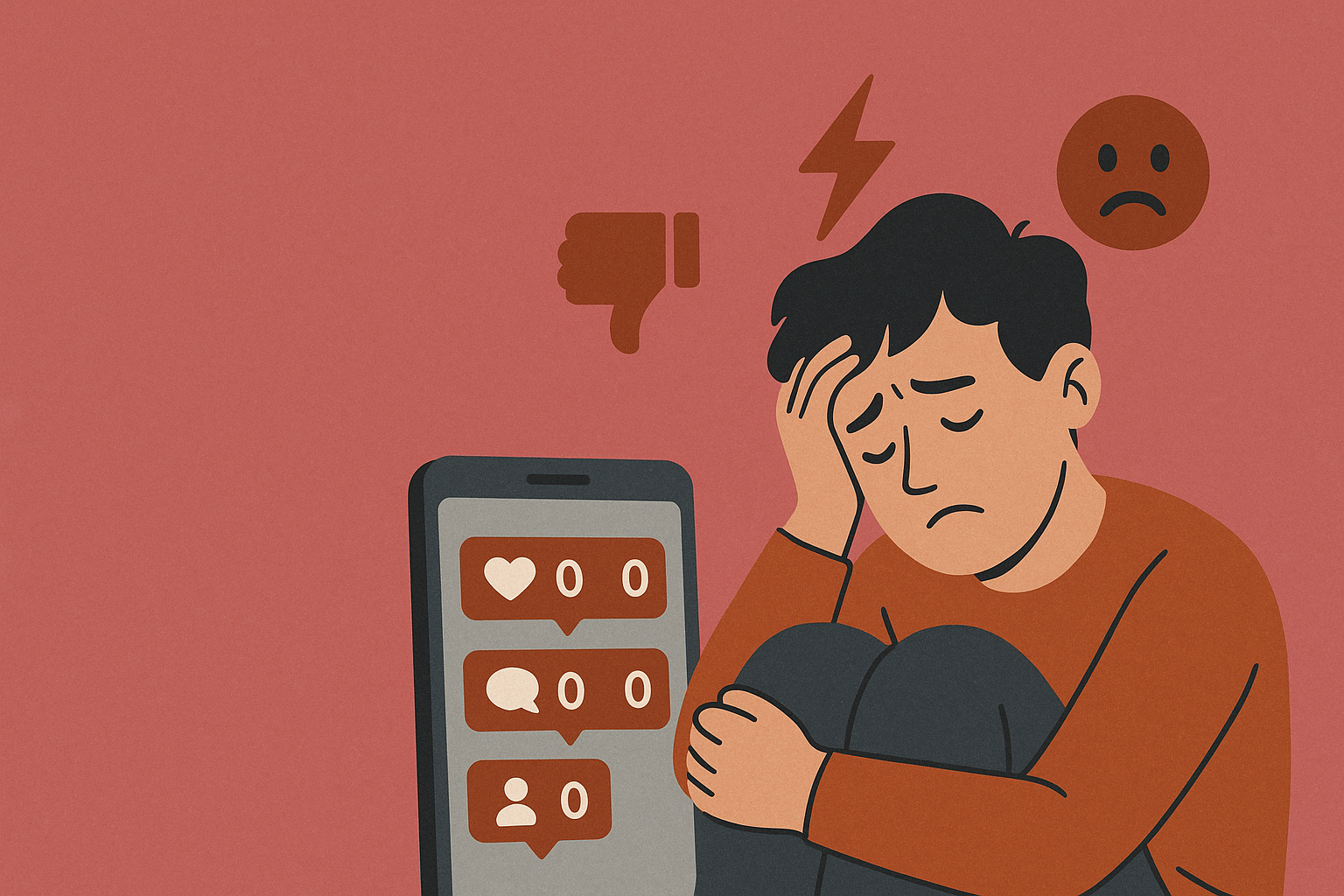
Let’s take another example: a teenager posts a photo. Within minutes, they refresh the screen, hoping for likes. At first, the numbers climb. But then they stop.
Suddenly, instead of joy, the teen feels a pit in their stomach: “Why don’t people like me enough?”
Research says:
- Teens who receive fewer likes on posts often report lower self-esteem and greater feelings of rejection.
- A study from the University of California, Los Angeles, found that seeing posts with many likes triggers stronger activity in brain regions linked to reward.
Expert Warnings We Can’t Ignore
Even tech leaders admit the dangers:
- Sean Parker, Facebook’s first president, said the platform was designed to exploit psychology with “a little dopamine hit.”
- Chamath Palihapitiya, former Facebook executive, said social media is “ripping apart the social fabric of society.”
When insiders admit it, it’s not just paranoia. It’s proof that the effects of social media on mental health were anticipated and often ignored.
Protecting Your Mental Health in a Digital Age
The solution isn’t to delete every app. It’s to take back control.
Practical ways to balance social media and mental health:
- Set limits: Use screen-time trackers to cap daily use.
- Digital detox days: Pick one day a week to go offline.
- Curate your feed: Follow accounts that inspire, mute those that trigger stress.
- Prioritize real connections: Face-to-face time with friends reduces loneliness.
- Be mindful: Before posting or scrolling, ask: “Is this adding value or draining me?”
FAQs
Can social media cause depression?
Yes. Multiple studies show that heavy use doubles the risk of depression.
Which platform is worst?
Research suggests Instagram has the strongest negative effect, especially on body image.
Should I quit social media completely?
Not necessarily. Mindful, limited use can protect your mental health.
How can parents protect kids?
Encourage open talks, monitor usage, and promote hobbies away from screens.
Taking Back Control
Social media is powerful. It connects us, educates us, and entertains us. But it also fuels anxiety, depression, low self-esteem, and poor sleep. The effects of social media on mental health are real and too serious to ignore.
So tonight, when you reach for your phone before bed, pause for a moment. Ask yourself: “Is this helping me, or is it hurting me?”
Social media should be a tool that serves your life, not a force that controls it.